
Bed bugs have been biting humans for thousands of years, yet confusion about how they spread remains common in schools, dormitories, and homes. One in five Americans has dealt with an infestation or knows someone who has, according to survey data from the National Pest Management Association. That prevalence means teachers, resident advisors, and parents are often the first line of defense, and misinformation can slow a response at exactly the moment speed matters most.
Bed bugs do not follow the patterns people expect from other pests. They are not drawn to filth, they can survive in the cleanest rooms, and they travel by hitching rides on luggage, backpacks, and clothing rather than crawling in from outside. Because they are small and mostly active at night, many people never notice one until an infestation has already grown. Recognizing this gap is part of why educational outreach matters, and it is also why Buffalo exterminators bed bug services and similar providers have leaned into public education alongside treatment work, since an informed household or campus community tends to catch problems earlier.
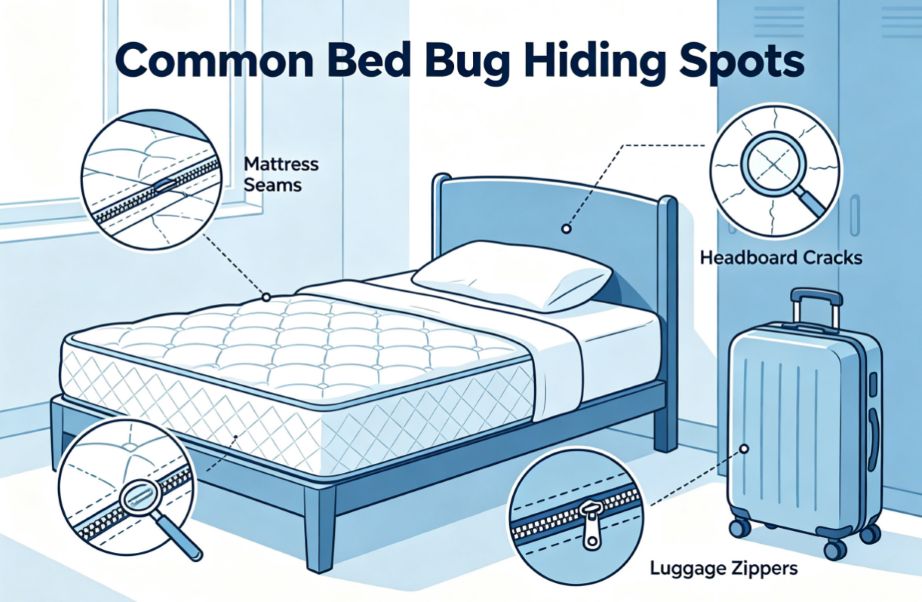
Why Bed Bug Misinformation Remains Widespread
Misinformation persists partly because bed bugs largely vanished from common experience for much of the twentieth century after widespread pesticide use nearly eliminated them, then resurged in the 1990s and 2000s as resistant populations developed. Entire generations grew up without direct exposure to the pest, so folklore filled the knowledge gap. Findings from the U.S. Environmental Protection Agency note that bed bugs are officially recognized as a public health pest, a designation made jointly with the Centers for Disease Control and Prevention and the U.S. Department of Agriculture. Despite that recognition, many people still associate bed bugs with poor hygiene, which delays reporting out of embarrassment rather than genuine risk.
Five Common Myths and the Facts Behind Them
- Myth: You cannot see a bed bug with the naked eye. Reality: Adults are roughly the size of an apple seed and nymphs resemble a sesame seed, both visible without magnification, according to the Utah Department of Health and Human Services.
- Myth: Bed bugs only live in dirty homes. Reality: Research from the U.S. Environmental Protection Agency shows the insects are attracted to warmth, blood, and carbon dioxide rather than dirt, though clutter gives them more hiding spots.
- Myth: Bed bugs spread disease between people. Reality: The Centers for Disease Control and Prevention has found no evidence linking bed bugs to disease transmission, though bites can cause itching, skin infections from scratching, and real psychological distress.
- Myth: Keeping a light on will keep them away. Reality: Data from the EPA indicates that while bed bugs prefer darkness, a lit room does nothing to stop them from feeding when hungry.
- Myth: Spraying pesticide once will solve the problem. Reality: Experts at the EPA note that many populations have developed pesticide resistance, so effective control usually requires a layered strategy involving inspection, heat, and ongoing monitoring.
How Schools, Dormitories, and Families Can Encourage Early Detection and Reporting
Speed matters more than almost anything else once bed bugs are suspected. Guidance published by Oregon State University Extension Service recommends annual training for teachers and staff so they can recognize the insect at every life stage and know who to contact if one turns up in a classroom or dorm room. College housing offices have adopted similar approaches. Policies at institutions such as Barnard College and Shippensburg University instruct students to notify residence life staff the same day a bed bug is suspected, since waiting even a few days allows a small problem to spread through shared furniture or laundry facilities.
Families can apply the same logic at home. Encouraging children to tell a parent or school nurse about unusual bites or small reddish insects, rather than staying quiet out of embarrassment, shortens the window between introduction and treatment. Guidance distributed by Virginia’s Department of Agriculture and Consumer Services suggests schools brief parents proactively at the start of the year, so a report of bed bugs prompts a calm, practiced response instead of panic. Beyond bed bugs specifically, eliminating pests at home promptly matters for broader reasons too, since delayed action against any household pest tends to allow small problems to spread into larger, costlier ones.
The Role of Professional Inspections and Evidence-Based Treatment Methods
Once bed bugs are suspected, a trained inspector should confirm the finding before any treatment begins. Some college programs, including guidelines compiled by the Cuyahoga County Board of Health, describe the use of detection canines for faster room inspections, particularly in large residence halls where manually searching every unit would be impractical. After confirmation, licensed pest management professionals typically combine several tools, including targeted heat treatment, careful vacuuming, mattress encasements, and limited pesticide application, since relying on a single method tends to leave survivors behind. This layered approach mirrors what public health agencies recommend and reflects the same principles residential pest control companies use when walking clients through an inspection and treatment plan.
Key Takeaways for Improving Public Awareness and Prevention Efforts
Clear, accurate information changes how quickly people respond to bed bugs and how much treatment ultimately costs. Teaching students and families to recognize the insect, understand that cleanliness offers no immunity, and report suspicions immediately closes the gap between infestation and resolution. Schools and dormitories that pair staff training with straightforward reporting procedures tend to catch problems while still isolated to a single room or backpack. As awareness grows alongside ongoing research into resistant bed bug populations, the combination of public education and professional pest management remains the most reliable path toward fewer infestations and less anxiety when one does occur.