
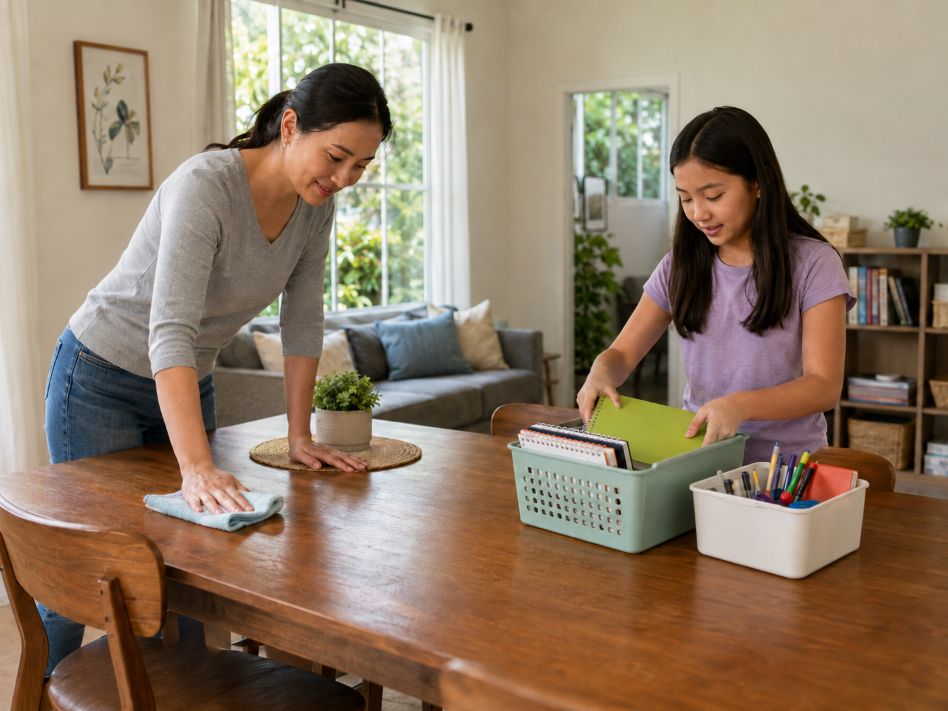
A clean and orderly home can make studying easier because it may reduce distractions and make materials easier to find. That does not mean a spotless house directly causes better grades. Academic performance depends on many factors, including sleep, teaching quality, motivation, health, family support, and access to learning resources. Still, the setting where a student studies can affect how smoothly a study session begins and how easy it is to stay focused.
For busy households, the goal does not have to be perfect cleanliness. It may be more useful to keep the main study area functional and predictable. Families balancing jobs, school schedules, meals, and other responsibilities may sometimes consider a house cleaning service White Marsh MD as one way to reduce routine cleaning demands. Others may prefer shared chores and regular household resets.
Why the Study Environment Matters
Students benefit from having a consistent place to read, write, and complete assignments. The American Academy of Pediatrics recommends a homework area that is quiet, well lit, and relatively free from distractions. It also suggests keeping needed materials nearby so children can start without repeatedly searching for supplies.
Visual surroundings may matter too. Research from the Princeton Neuroscience Institute, published in the Journal of Neuroscience, found that multiple objects in the visual field can compete for neural representation. The study was not about dirty homes or school grades, so its findings should not be stretched too far. However, it helps explain why a crowded workspace may demand attention. A desk filled with toys, dishes, mail, and unrelated items creates more competing visual information.
Clutter Is Only One Kind of Distraction
A home can be clean and still be difficult for studying. Television, loud conversations, interruptions, shared rooms, and unpredictable schedules can also break concentration. Researchers use the term household chaos to describe conditions that can include disorganization, noise, crowding, instability, and inconsistent routines.
A 2021 meta-analysis published in Psychological Bulletin reviewed 35 studies involving 16,480 children. It found a modest association between household chaos and weaker executive functioning, including skills related to working memory and self-control. However, association does not prove that household disorder directly causes learning problems.
A 2025 study in Learning and Individual Differences also found that relationships between household chaos and educational achievement were affected by genetic and socioeconomic factors. The researchers concluded that the relationship was likely more complicated than a simple cause-and-effect pattern. Cleanliness is therefore better viewed as one part of a supportive learning environment, rather than a direct route to higher grades.
What Makes a Study Space More Functional?
Families do not need a separate home office. A bedroom corner, dining table, or another shared surface can work if it becomes predictable during study time. Guidance from the American Academy of Pediatrics emphasizes having a regular, quiet place for homework and limiting unnecessary distractions.
- Keep pens, paper, chargers, and commonly used books together.
- Clear food containers, laundry, and unrelated objects before study time.
- Reduce television and entertainment media during homework.
- Make sure the student has enough light and work surface.
- Return school materials to the same place after use.
These steps focus on function rather than appearance. A room does not need to look professionally organized. It simply needs to make the next study task easier to begin.
Routines Can Reduce the Daily Scramble
Regular routines can help students know when study time begins. HealthyChildren.org, a resource from the American Academy of Pediatrics, explains that predictable family routines can help organize daily life. Its guidance also suggests including study time as part of an after-school routine.
Families can apply the same idea to cleaning. A five-minute desk reset after homework can keep papers, cups, and supplies from piling up. Using small daily decluttering habits can also make household upkeep feel more manageable. A short evening tidy can prepare shared areas for the next day instead of leaving everything for a larger weekend cleanup.
Dividing chores can spread the workload. Younger children can put books and supplies away. Older students can wipe a table, vacuum a study area, or help with dishes. The exact system can vary by household, but predictable responsibilities can keep everyday maintenance from interfering with study time.
Where Cleanliness Falls Short
An orderly room cannot solve every study problem. A student may still struggle because of stress, lack of sleep, difficult coursework, attention problems, or limited academic support. The Centers for Disease Control and Prevention notes that adequate sleep helps students stay focused and supports concentration and academic performance.
Families should therefore avoid treating cleaning as the main answer when a student is falling behind. A more useful question is whether the home setup removes unnecessary friction. If a student can sit down, find materials, work without constant interruption, and follow a dependable routine, the physical environment is serving its purpose.
Simple Habits That Cost Little or Nothing
Clear one work surface each day. Keep school materials together. Turn off background television during focused work. Return cups and plates to the kitchen. Set a regular time for a short room reset. Students can also help decide how their study area is arranged, which can make the system easier for them to use consistently.
A clean home does not guarantee stronger grades. It can, however, support a calmer and more usable place for learning. The practical goal is not perfection. It is a home environment that makes studying easier to begin, easier to organize, and less likely to be interrupted by preventable distractions.